Micro-acquisitions allow technical operators to skip the high-risk “zero-to-one” validation phase by purchasing existing cash-flowing web apps between $10k and $250k on marketplaces like Acquire.com, immediately increasing revenue through modern pricing, technical refactoring, and SEO optimization.
Key Takeaways & Quick Summary
- Buying an existing asset with paying customers bypasses the 90% failure rate of starting from zero.
- The ideal target: a solo-developer SaaS with $1k-$10k MRR, low churn, great product utility, but terrible marketing.
- Immediate value creation: modernize legacy codebases, optimize Core Web Vitals, and raise outdated legacy pricing.
- Technical due diligence must audit customer concentration, codebase architecture, and intellectual property ownership.
The “Zero to One” Trap
Starting a software company from a blank slate is an excruciating, statistically perilous endeavor. Over 90% of new software projects die in the zero-to-one phase: spending six months building an MVP, only to discover that the target market does not exist, will not pay, or is already dominated by aggressive incumbents.
Micro-acquisition is the ultimate entrepreneurial hack for technical builders. Instead of guessing what people will buy, you acquire an existing micro-SaaS application that already possesses paying customers, proven product-market fit, and organic search traffic, but has been neglected by its original creator.
In 2026, marketplaces like Acquire.com, Flippa, and private brokerages transact thousands of profitable niche web apps generating $1,000 to $20,000 in monthly recurring revenue (MRR).
The Ideal Acquisition Profile: The “Engineer-Built” Asset
The highest-ROI acquisition targets share a recognizable profile: they were built by a brilliant solo engineer who loved authoring backend code but despised marketing, sales, copywriting, and customer success.
The product is rock-solid and customers rely on it daily, but the marketing website is outdated, pricing hasn’t been adjusted in four years ($9/month lifetime grandfathered accounts), the sign-up funnel is confusing, and zero SEO content exists.
For a modern technical operator equipped with product design, marketing acumen, and AI development speed, these assets are goldmines waiting to be unlocked.
Rigorous Technical & Financial Due Diligence
Never wire capital without exhaustive due diligence. Financial verification requires connecting the seller’s Stripe or Paddle account directly to metrics tools like ProfitWell or Baremetrics to verify Net Revenue, MRR growth, and cohort churn rates.
Technical due diligence is equally critical: audit git commit histories to ensure the seller didn’t outsource development to unverified third parties who retain IP claims; verify that third-party API dependencies (e.g. OpenAI or Twilio) are sustainable; and check that server hosting costs do not exceed subscription revenues.
The 90-Day Post-Acquisition Value Creation Playbook
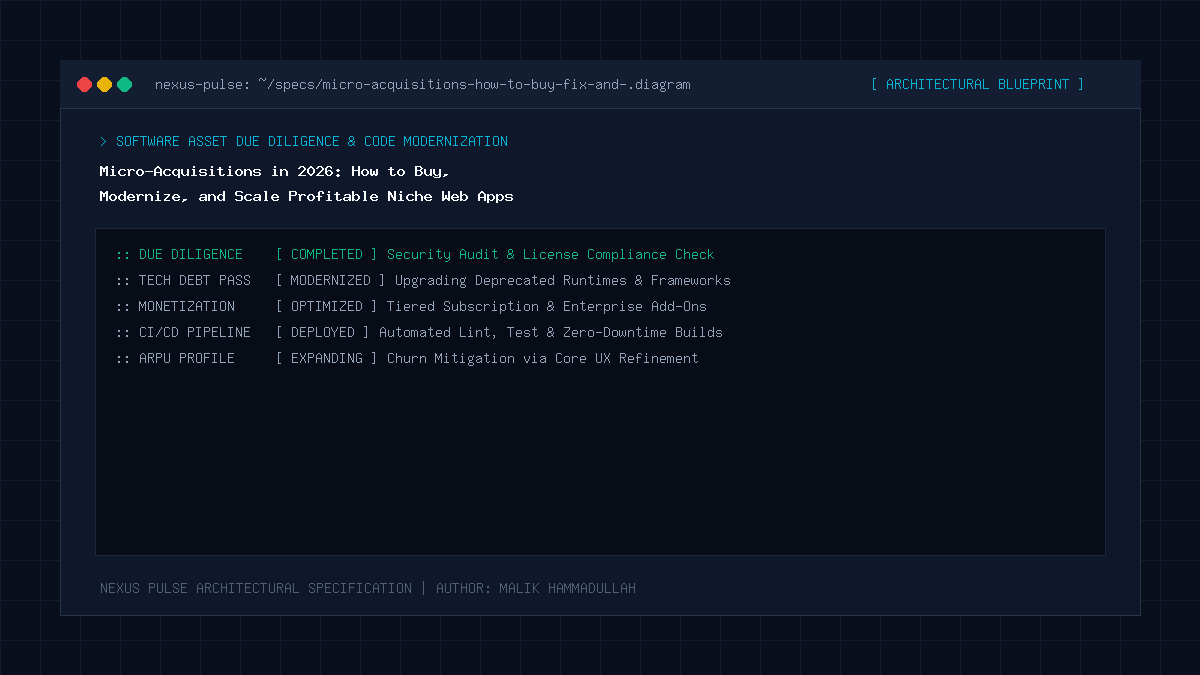
Day 1-30: Fix technical debt and customer communication. Upgrade deprecated framework packages, migrate to high-speed LiteSpeed servers, resolve outstanding customer support tickets, and personally interview the top 20 customers to identify their most requested feature.
Day 31-60: Overhaul pricing and packaging. Introduce value-metric tiers, grandfather existing users graciously while doubling prices for new signups, and introduce annual billing discounts to generate immediate upfront cash flow.
Day 61-90: Activate organic growth. Implement a 10x content marketing strategy, launch on Product Hunt, optimize Google search snippets, and set up automated customer onboarding emails. Within 90 days, disciplined operators frequently double or triple the asset’s recurring revenue.
Micro-Acquisitions in 2026: Architecture & Technical Specifications Matrix
Starting from Scratch vs Micro-Acquisition (Risk & Return Profile):
| Dimension | Building from Scratch (0 to 1) | Micro-Acquiring an Existing App (1 to 10) |
|---|---|---|
| Time to First Dollar | 6 to 18 months of unpaid development | Day 1 (Immediate recurring cash flow) |
| Validation Risk | Extreme (90% of MVPs fail to find customers) | Low (Verified customers already swiping cards) |
| Initial Capital Required | Sweat equity or $10k-$50k development burn | $10,000 to $100,000 acquisition purchase price |
| Primary Work Focus | Speculative coding & cold outreach | Optimization, marketing, refactoring & scaling |
| Expected Time to $10k MRR | 2 to 3 years (If successful) | 6 to 12 months with disciplined turnaround |
Official Specifications & Primary Sources
Architectural specifications, model capabilities, and benchmark evaluations in this guide are cited from official documentation and published papers (verified as of October 2026):
- Acquire.com: Acquire.com SaaS Valuation & Due Diligence Guide
- GitHub: GitHub Technical Debt Assessment Framework
Micro-Acquisitions in 2026: Engineering Questions & Practical Considerations
What are micro acquisitions in SaaS?
Micro acquisitions involve purchasing small, cash-flowing web applications and SaaS tools (typically valued between $10,000 and $250,000) from solo developers, allowing technical entrepreneurs to acquire immediate product-market fit and revenue without 0-to-1 startup risk.
How much do profitable micro-SaaS businesses sell for?
Standard market valuation multiples for micro-SaaS range between 2.5x to 4.5x Annual Recurring Revenue (ARR) or 25x to 45x Monthly Recurring Revenue (MRR), depending on growth rate and churn.
Where are the best marketplaces to find micro-acquisitions?
Acquire.com is the gold standard for verified SaaS listings, along with Flippa, Quiet Light Brokerage, and direct outbound sourcing via Twitter/X build-in-public communities.
Do I need to be a programmer to buy a micro-SaaS?
While non-technical operators can hire contractors, technical buyers have an immense competitive advantage because they can personally inspect code quality, fix bugs, and refactor architecture without burning cash.
Join Our Official WhatsApp Channel
Get instant notifications for breaking AI developments, developer security guides, and tech intelligence directly on WhatsApp.

Recommended Reading